
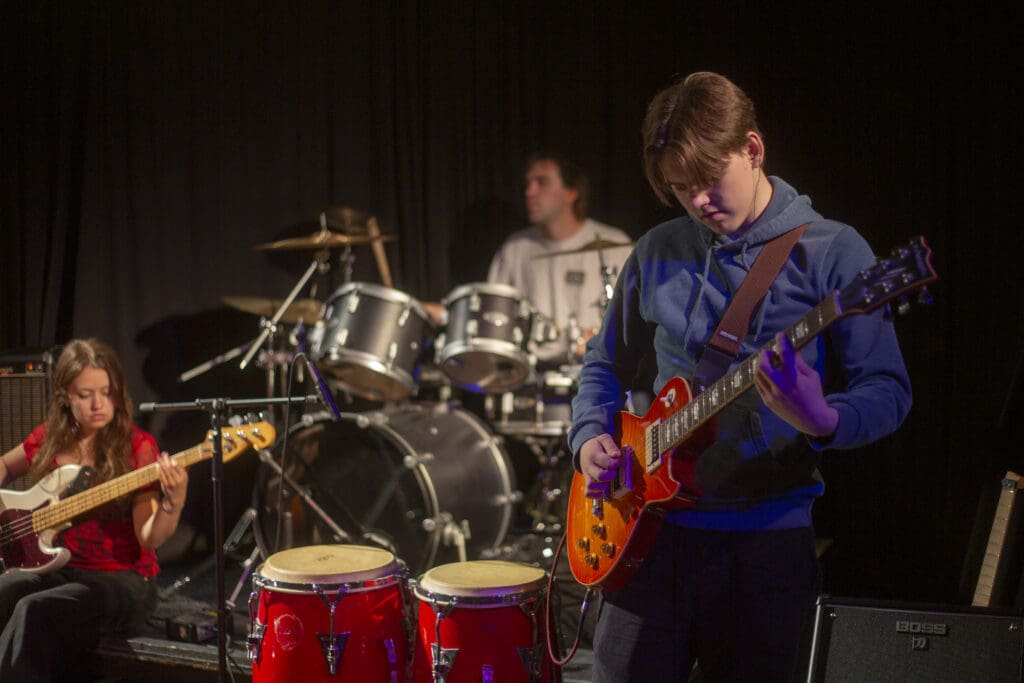
A young band is rehearsing on stage with an electric guitar, a bassist, a drum kit, and red conga drums.

Individual Scholarship Student

As an individual scholarship student, you are closely affiliated with a specific study track. To qualify for this role, you must be able to outline a project that you will work on throughout the year. You will both attend classes with the study track and work on your own project.

We focus on collaboration, so it is natural for you to work with other study tracks, fellow students, local businesses, and the like. Throughout the year, you will showcase your work to the other students—for example, through exhibitions, concerts, performances, or music releases. You will collaborate with your track instructor and receive guidance on your work.



Sigve is an individual scholarship recipient in the music program for the 2025–26 school year.


Johanne is an individual scholarship recipient in the art program for the 2025–26 school year.


As a scholarship student, you pay NOK 30,000 for the entire year. This amount is just under half of the grant you receive from Lånekassen if you complete the year. It covers the essential licenses you need. You must personally cover the cost of any study trips taken with your specific program. As a scholarship student, you have certain social responsibilities during the year, but you retain student status and are therefore eligible to apply for both loans and grants from Lånekassen.

As an individual scholarship student, you will be affiliated with the specific program track you applied for. This means that one of the school’s teachers will serve as your instructor or subject supervisor throughout the year.

The teacher for the specific program will act as a mentor, a source of inspiration, and a source of professional support. Mentorship is based on each student’s individual expression, interests, developmental stage, and project plan, fostering both artistic depth and personal growth. The teacher will assist the student in exploring ideas, further developing their projects, and finding their artistic voice through dialogue, practical work, and constructive feedback.

The guidance also involves challenging students to make deliberate choices regarding process and materials, reflect on their own work, and cope with trial and error. The teacher provides subject-specific input, while students are encouraged to experiment and think independently.